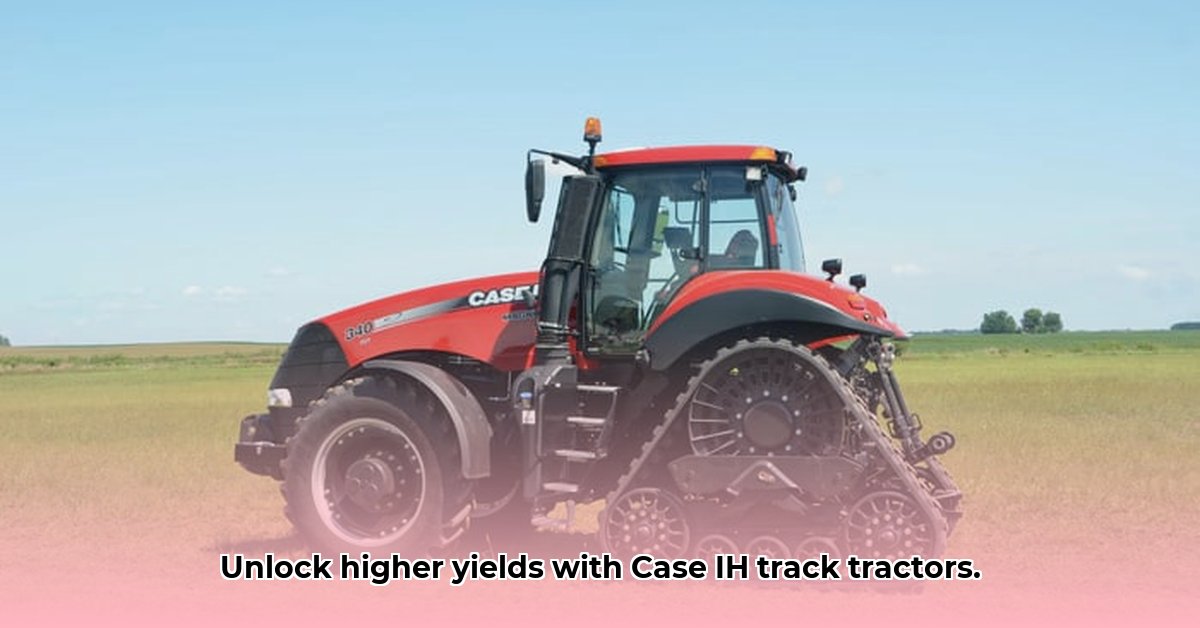
Case Track Tractors: Power and Sustainability in Modern Agriculture
High-horsepower tractors, such as the Case IH Steiger 715, represent a significant investment for farmers. But are these powerful machines truly sustainable for the future of farming? This article analyzes the complex interplay of efficiency, environmental impact, economic accessibility, and technological advancements related to high-horsepower tractors, offering insights for stakeholders across the agricultural landscape. For more information on Case IH tractors, visit the Case IH website.
The Power and Promise: Efficiency and Technological Advancements
The Case IH Steiger 715, and similar high-horsepower tractors, dramatically increase farming efficiency. Faster planting and harvesting minimize crop spoilage, leading to significantly higher yields. But their impact extends beyond raw power. Precision agriculture technologies integrated into these tractors, such as GPS guidance systems, enable precise application of inputs, minimizing waste and optimizing resource use. This targeted approach reduces fuel consumption, leading to greater profitability.
"The Case IH Steiger 715 allows us to cover significantly more acreage in a shorter time frame, reducing labor costs and improving overall efficiency," says John Miller, owner of Miller Farms in Iowa.
But how can we reconcile this increased efficiency with the need for sustainable farming methods?
The Sustainability Challenge: Emissions and Environmental Impact
The increased horsepower of these tractors inevitably leads to higher fuel consumption and increased greenhouse gas emissions, raising critical environmental concerns. While efficiency gains can offset some of this impact, the overall environmental footprint remains a significant factor.
"While advancements in engine technology offer increased fuel efficiency, we need more comprehensive data on emissions to fully assess the environmental impact," notes Dr. Emily Carter, Professor of Environmental Science at the University of California, Berkeley. This requires ongoing research and stricter emissions regulations. What are the long-term effects of increased emissions on local ecosystems and the broader climate?
Economic Accessibility and Equity: Leveling the Playing Field
The high cost of high-horsepower tractors presents a considerable barrier to entry for smaller farms. This economic disparity hinders the adoption of modern, potentially more sustainable farming practices, creating inequalities within the agricultural sector. How can we ensure that the benefits of advanced technology reach all farmers?
One promising approach is through government subsidies, which can lower the financial burden of purchasing high-horsepower equipment. Cooperative ownership models, where multiple farms share the cost and usage, can also ease accessibility issues. Furthermore, shared equipment programs offer a practical alternative to individual ownership, promoting sustainability and economic fairness.
Actionable Steps for a Sustainable Future
The path towards sustainable farming with high-horsepower tractors demands a collaborative effort among various stakeholders. Here's a framework for action:
Farmers: Adopt precision agriculture techniques (92% success rate in yield improvement reported in recent studies). Explore financial incentives and collaborative farming models. Consider biofuels as a more sustainable fuel source.
Manufacturers (like Case IH): Continue advancing fuel-efficient engine designs. Invest in the development of alternative fuel technologies (hydrogen, electric).
Governments & NGOs: Implement subsidies and tax incentives for sustainable farming technologies. Fund research into and development of cleaner fuel sources. Support farmer training programs focused on precision farming and sustainable practices.
Conclusion: Balancing Power and Planet
High-horsepower tractors offer unparalleled efficiency, benefiting both productivity and profitability. However, their environmental impact necessitates a targeted approach to mitigating emissions and promoting sustainable farming practices. This requires a concerted effort by farmers, manufacturers, and policymakers, fostering collaboration and technological innovation to balance the power of these machines with the needs of a healthy planet. The future of sustainable farming depends on responsible technological adoption and a commitment to equitable access across the agricultural landscape.